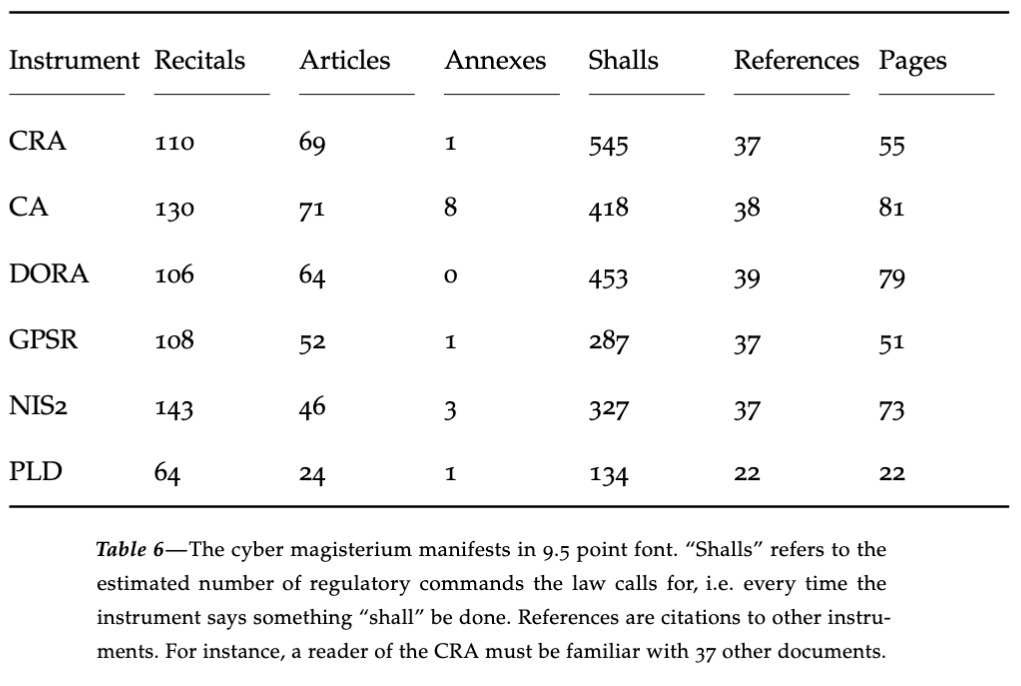
If your clients develop standalone software or connected products, they need to know about the European Cybersecurity Framework. Enacted with little public attention, the Framework imposes far-reaching obligations on developers of standalone software and connected products. It establishes a stringent software product liability regime with rigorous security requirements and no meaningful small-business relief. In many respects, it is more prescriptive and airtight than the EU’s privacy laws. Compounding the Framework’s impact, recent changes to EU law have moved toward a California-style products liability system. The Framework will take full effect in December 2027, meaning that companies must integrate its requirements into their current product cycles.
This Article first sets forth the European legislative context for US lawyers and then describes the Framework’s legal architecture. Part three evaluates its strategic effects, arguing that it will prove costly yet likely ineffective, given enduring economic incentives that reward first-to-market products, even when insecure. More broadly, the Framework risks expanding a regulatory magisterium—populated by compliance professionals and enforcement agencies—whose layered rules may add costs and blunt the innovative potential that makes software so generative.